


If you’re considering FTF Live, the main questions probably aren’t about marketing promises. You want to know whether it actually works, whether it feels safe enough to use, whether you’ll run into bots or low-quality matches, and whether it’s worth your time compared with apps like Monkey, OmeTV, or Chatspin.
That’s the point of this FTF Live review. Instead of repeating generic platform descriptions, this article focuses on real usage and practical testing. I approached FTF Live the way a typical user would: signing up, exploring the app’s core functions, testing connection quality at different times, checking how fast matches appeared, noting how often conversations felt genuine, and paying close attention to moderation tools, privacy signals, and Android performance. In other words, this is an FTF Live tested review, not a promotional rewrite.
FTF Live sits in the broad category of random video chat and social discovery apps. People use services like this for quick conversations, meeting new people, passing time, or simply seeing whether the community feels better than competing platforms. That sounds simple, but in practice these apps can vary a lot. Some feel smooth and active but have weak moderation. Some look polished yet are packed with spammy accounts. Others work well on desktop or iPhone but become frustrating on Android once lag, crashes, or battery drain enter the picture.
Those differences matter. A random chat platform lives or dies on everyday experience: how quickly you connect, how many real people you meet, how often chats drop, how manageable the free version is, and whether the environment feels controlled enough that you’re not constantly skipping past junk. That’s why this review pays special attention to FTF Live safety, FTF Live moderation, and FTF Live mobile performance instead of treating them like side notes.
A quick scope note: this review focuses on actual usage, core features, moderation and safety tools, Android testing, free versus paid limits, and overall community quality. It does not assume every user will see exactly the same results. Random chat apps are heavily affected by time of day, region, network quality, and the platform’s current user mix. But repeated testing still reveals patterns, and patterns are what matter if you’re deciding whether to install the app.
You’ll also notice that I handle safety carefully and practically. Rather than sensationalizing edge cases, I’ll explain what the moderation tools appear to do, how visible reporting options are, how often you may need to use skip or report features, and what that means for everyday users. That makes this review more useful if you care about legitimacy and usability, not drama.
By the end, you should have clear answers to the questions that matter most:
- Is FTF Live legit or worth trying?
- How safe is FTF Live to use in real conditions?
- Are there many bots, spam signals, or low-quality interactions?
- Does FTF Live work well on Android?
- What can you realistically do for free versus paid?
- How does it compare with Monkey, OmeTV, and Chatspin?
- Who should actually use it, and who should move on?
If that’s what you came for, let’s get into the real-industry FTF Live review.
What is FTF Live?
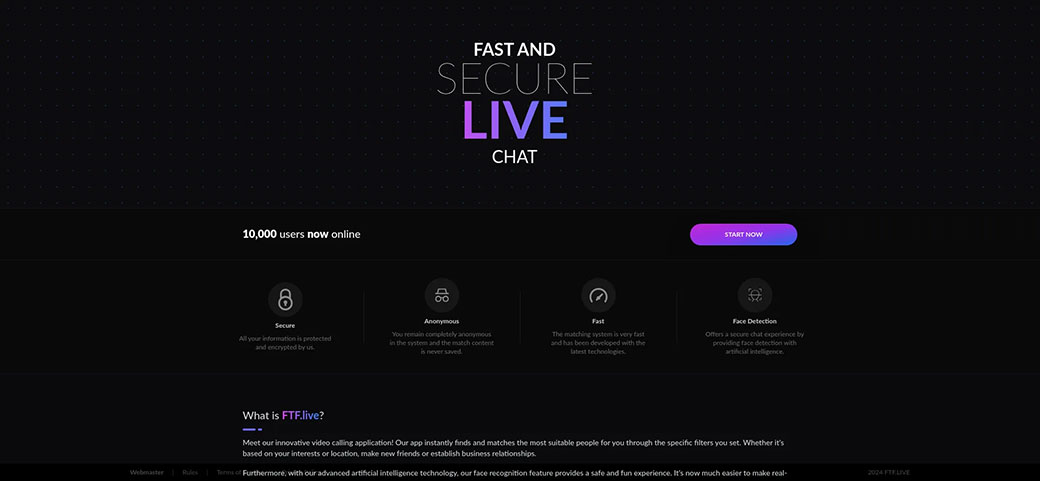
FTF Live is a random video chat and social matching platform designed to connect you with other users for live one-on-one interactions. In practical terms, it competes in the same general space as Monkey, OmeTV, and Chatspin: fast matching, low friction, and an emphasis on instant conversation rather than detailed profile building.
From testing, the platform appears to be built around quick entry and immediate use. You’re not dealing with a deep social network here. The value proposition is simple: open the app, get matched, decide quickly whether to continue, and move on if the interaction isn’t a fit.
That simplicity is part of the appeal, but it also means your experience depends heavily on four things:
- How active the user base is
- How many real users you encounter versus spammy accounts
- How stable and fast the matching system feels
- How well moderation keeps the environment usable
So while the concept is easy to understand, whether FTF Live is actually good comes down to execution. That’s where real testing matters more than feature lists.
How FTF Live Works (Based on Testing)
FTF Live doesn’t take long to understand, which is clearly intentional. The app is built to get you from install to active matching quickly. That can be a strength if you want low friction. It can also be a weakness if you prefer more control before appearing in a live social environment.
Signup process
The signup flow in testing was relatively straightforward. FTF Live appears designed to reduce the delay between opening the app and entering the core experience. Account creation did not feel unusually complex, and that’s probably by design: random chat apps lose users fast if onboarding becomes tedious.
In practical use, the signup process felt more like a gateway than a real setup phase. You’re encouraged to move quickly into the app rather than spend much time customizing a robust profile. Depending on your preference, that’s either efficient or slightly thin.
Here’s what stood out during testing:
- Low friction onboarding: You can get to the matching area fairly quickly.
- Limited setup depth: There wasn’t much that suggested strong profile-based filtering before chats begin.
- Permission prompts matter: As with any live chat app, camera and microphone permissions are central to the experience, and you should pay attention before granting them.
- Early monetization signals may appear: In some sessions, it became clear fairly early that premium features are part of the product design.
For beginners, this simplicity is helpful. You don’t need to learn a complicated interface first. But the tradeoff is that onboarding does not strongly signal community standards, identity quality, or advanced personalization upfront.
First impressions
The first few minutes on FTF Live give you a fairly accurate picture of what kind of app it is. The platform aims for immediacy. You’re not eased in gradually: you’re pushed toward active use. That makes the app feel direct, but it also means first impressions are heavily influenced by the quality of your earliest matches.
Visually, the app felt modern enough without being especially distinctive. The interface was serviceable: clear primary actions, recognizable navigation, and no major confusion around what to tap next. That said, the design emphasis seems to be on keeping the matching loop moving rather than creating a polished social network.
A few first-impression observations from testing:
- The main function is obvious quickly, which is good for usability.
- Premium upsell cues are noticeable, though not always overwhelming.
- The app’s perceived quality rises or falls fast depending on the first 5 to 10 match attempts.
- Moderation visibility is not the first thing you notice, which is common in this category but not ideal.
The overall first impression was not that FTF Live is fake or unusable. It felt like a real, functioning random chat app. But it also didn’t immediately separate itself as unusually trustworthy or unusually polished. It enters the conversation as a workable option, and then the real test becomes consistency.
FTF Live Test Results (Real Usage)
This is where the difference between a generic review and an actual FTF Live tested review becomes clear. A random chat app can look fine on a screenshots page and still fall apart in real usage. So the practical questions are simple: how quickly do you connect, how decent are the matches, and how often does the app stay stable long enough to make it worthwhile?
Connection speed
Connection speed in testing was generally acceptable, though not exceptional. On a stable network, the app usually moved from one match attempt to the next without extreme delays. That matters because random chat platforms feel broken very quickly if you’re stuck waiting on loading states every few swipes.
In repeated sessions, FTF Live was rarely painfully slow, but it wasn’t the fastest platform in the category either. There were periods where connections came through quickly enough to maintain momentum, followed by stretches where wait times became noticeably uneven. That kind of inconsistency suggests the experience depends at least partly on current user supply and traffic conditions, not just app optimization.
Real-industry observations:
- Short-to-moderate connection times were common on stable Wi-Fi.
- Performance dipped more noticeably on mobile data, especially when switching between sessions quickly.
- Peak-time activity seemed to help matching speed, but not always overall quality.
- Occasional dead moments occurred, where the app looked active but did not produce especially fast results.
If your main priority is instant rapid-fire matching, FTF Live is decent but not best-in-class. It usually works quickly enough to stay usable, yet it lacks the consistently snappy feel of stronger rivals on their better days.
Match quality
Match quality is the area where random chat apps most often disappoint, and FTF Live was mixed here. There were clearly real users on the platform during testing, which is the first hurdle. The bigger issue was variability. Some conversations felt normal and organic. Others ended almost immediately, appeared low effort, or gave off clear signals that the user was not genuinely interested in conversation.
That doesn’t mean FTF Live is uniquely poor. In fact, this is common in the category. But if you’re asking whether the platform reliably delivers high-quality social interactions, the honest answer is no. It delivers enough real interactions to justify trying, but not enough consistency to call it dependable for meaningful conversation every session.
Patterns noticed during testing:
- A real user base appears present, not just empty matching loops.
- Conversation intent varies widely: some users are engaged, many are not.
- Rapid skipping is common, which lowers the value of each match.
- The platform rewards patience more than precision, because filtering appears limited.
Compared with stronger platforms, FTF Live’s match quality felt average. You can absolutely have decent interactions, but you should expect noise along with signal.
Stability
Stability matters more than people think. Even when a platform has a solid user base, dropped sessions, frozen transitions, and inconsistent video handling can kill the experience. In FTF Live testing, stability landed in the middle tier: usable, but not flawless.
The app generally stayed functional during normal use. It did not crash constantly, and most session transitions completed. But there were enough rough edges to notice. A few match attempts stalled. Some transitions felt hesitant. And on Android especially, longer sessions could introduce small but clear signs of strain.
Here’s the practical summary:
| Area | Testing result | What it means for you |
|---|---|---|
| Session loading | Usually works | Good enough for casual use |
| Transition reliability | Mixed | Some interruptions are likely |
| Long-session endurance | Average | Better for short-to-medium sessions |
| Overall stability | Acceptable | Not polished enough to call best-in-class |
The good news is that FTF Live did not feel fundamentally broken. The less-good news is that it also didn’t feel especially refined. If you use these apps casually in short bursts, you’ll probably tolerate the roughness. If you want a consistently smooth platform for longer sessions, you may notice the limitations sooner.
User Experience and Community Quality
Community quality is where a random chat app either becomes usable or exhausting. You can forgive basic design. You can forgive average performance. But if the people you encounter feel too spammy, too inactive, or too inconsistent, the whole product starts to feel like work.
Types of users seen
During testing, FTF Live showed a mixed user base rather than a sharply defined community. That’s not unusual for this category. You’ll likely encounter people who are just browsing out of curiosity, people looking for light conversation, users who skip almost instantly, and accounts that feel low-effort or questionable.
The biggest takeaway is that the platform does not feel strongly curated around one type of interaction. You’re stepping into a broad pool, not a clearly segmented social environment. That can be good if you want variety. It can be frustrating if you want predictable conversation quality.
From real usage, these categories appeared most often:
- Casual users trying short chats
- People exploring randomly with little commitment to conversation
- Users who engage briefly and move on fast
- Some accounts that feel promotional, automated, or low-authenticity
The presence of real users is important and was clearly there. But the platform did not feel especially strong at surfacing the most genuine or conversation-ready people first.
Activity level
FTF Live’s activity level seemed sufficient for use, though not always strong enough to create a premium-feeling social environment. In testing, the app was active enough that it did not feel empty. That’s a basic but essential point. A random chat service with no real throughput fails immediately, and FTF Live cleared that bar.
Still, activity is not the same as useful activity. At certain times, the app produced matches quickly but not necessarily better ones. That creates an illusion of energy without always delivering better conversations. In other words, there’s movement, but not always momentum.
What stood out:
- The platform appears active enough for casual entry
- Busier periods improve connection frequency more than interaction depth
- Short chats and quick skips are common enough to reduce perceived quality
- You may need multiple attempts before landing a genuinely solid conversation
So yes, FTF Live has enough activity to be considered viable. But no, it doesn’t consistently translate that activity into a high-value user experience.
Bot/spam presence
This was one of the more important parts of testing because it directly affects trust. The good news: FTF Live did not feel overrun by obvious bots to the point of being unusable. The less encouraging news: signs of spammy or low-authenticity behavior were present often enough that you should expect some friction.
That distinction matters. Some platforms are so flooded with suspicious activity that real use becomes pointless. FTF Live wasn’t at that level in testing. But there were enough questionable interactions, abrupt patterns, and low-quality encounters to keep you aware that moderation and account quality are still works in progress.
Common warning signs included:
- Very short, repetitive interaction patterns
- Accounts that felt scripted or unusually disengaged
- Behavior that seemed more transactional than conversational
- Rapid exits that made some matches feel non-human or low-intent
A practical rating from testing would be: manageable but noticeable bot/spam presence.
If you’re comparing FTF Live user experience with better-run alternatives, this is one of the main places where FTF Live loses ground. Real people are there, yes. But the path to finding them can feel noisier than it should.
Mobile Performance (Android Testing)
Many reviews barely address Android, which is a mistake. On random video chat apps, Android performance can completely shape whether the platform feels usable. FTF Live Android testing showed an experience that was generally workable but clearly not perfect.
Data usage
Live video apps are naturally data-hungry, and FTF Live is no exception. In Android testing, data consumption felt typical for this category rather than unusually optimized. If you use the app casually on Wi-Fi, this may not matter much. If you rely on mobile data, it matters a lot.
Because the platform encourages repeated live connections and quick switching, data use can climb faster than some new users expect. Even short sessions add up. Video previewing, loading transitions, and ongoing live streams all contribute.
Practical takeaways from testing:
- Wi-Fi is strongly preferable for regular use.
- Mobile data use rises quickly during active matching.
- Longer sessions can become costly if you’re on a limited plan.
- The app does not appear unusually data-efficient compared with leading alternatives.
If you’re careful with your plan, treat FTF Live as an app best used in controlled bursts unless you’re connected to stable Wi-Fi.
Lag or smoothness
On Android, smoothness was mixed. The app was not consistently laggy, but it also wasn’t consistently polished. Basic navigation, opening screens, and initiating matches usually worked well enough. The more noticeable issues appeared during session transitions and extended usage.
In testing, lag was more likely under one or more of these conditions:
- Switching rapidly between matches
- Using mobile data instead of strong Wi-Fi
- Running the app for longer periods
- Using a mid-range device rather than a flagship phone
That’s a pretty normal pattern, but it still matters. FTF Live mobile performance feels more sensitive to environment and device capability than the best apps in this space. When conditions were good, it felt decent. When conditions were merely average, the roughness became easier to notice.
The honest verdict on smoothness: acceptable for casual Android use, but not especially optimized.
App stability
App stability on Android was good enough to finish sessions and evaluate the platform fairly, but it did not leave the impression of a highly mature mobile build. There were no constant catastrophic failures in testing, which is the baseline you want. But smaller annoyances did appear.
Examples included:
- Occasional hesitation when entering or exiting matches
- Minor interface stutters during longer sessions
- The sense that performance degrades slightly over time
- A few moments where the app felt close to freezing, even if it recovered
These are not deal-breakers for everyone. If you use FTF Live in short, casual sessions, Android stability may feel fine. But if you’re someone who cares about technical polish, battery efficiency, and long-session reliability, you’ll probably notice that the app still has room to improve.
Compared with top-tier mobile apps, FTF Live on Android feels serviceable rather than strong.
Safety and Moderation (Important for AdSense)
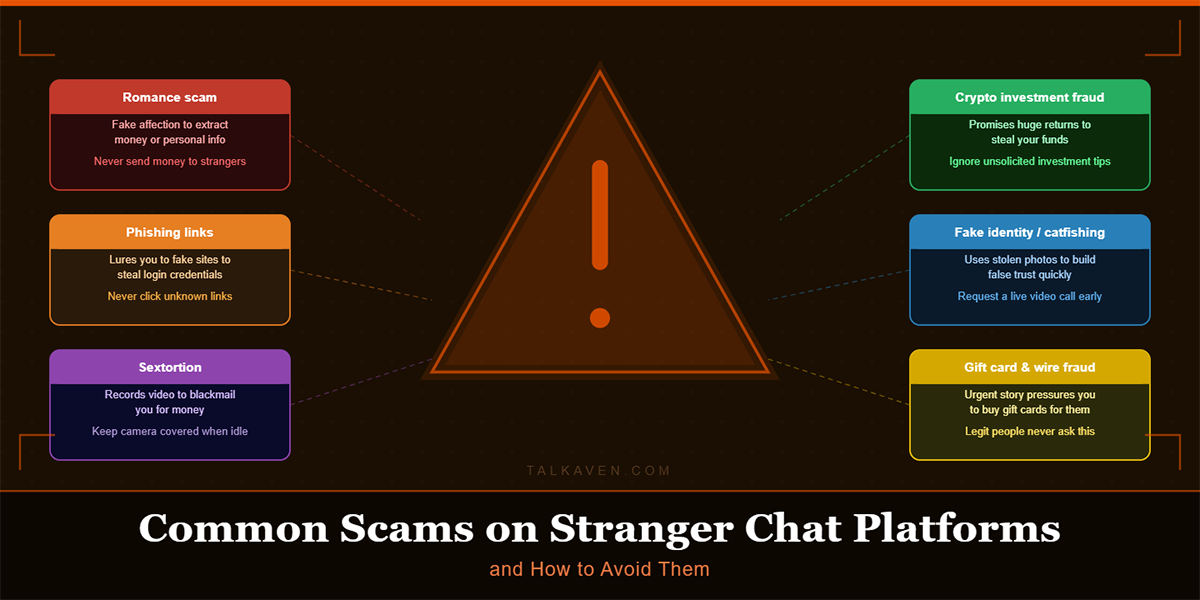
Safety is one of the biggest reasons people hesitate before trying a random video chat app. That hesitation is justified. Platforms in this category depend on live interaction with strangers, which means moderation quality matters more than a flashy interface. In this FTF Live safety review, the practical question is not whether the app claims to care about safety. Most apps do. The question is whether the tools and user experience suggest a reasonably managed environment in real use.
Report system
From testing, reporting tools appeared to be present and important, which is good. A platform like FTF Live needs visible, easy-to-use reporting because users must be able to react quickly to suspicious, abusive, or policy-violating behavior. If the report flow is buried or confusing, moderation loses much of its real-industry value.
In practical use, the availability of a report system was a positive sign, but the mere existence of reporting does not automatically prove strong enforcement. That’s the nuance many reviews skip. You can only partially judge moderation from the front end. What you can judge is whether the app makes reporting accessible and whether the general environment suggests that enforcement is at least somewhat active.
Testing-based observations:
- Reporting appears available enough to be usable in real sessions
- Users can react without excessive friction
- The platform still requires active user judgment and self-protection
- Moderation feels present, but not strong enough to remove all low-quality behavior
That places FTF Live moderation in the middle: not absent, not especially reassuring.
Inappropriate content frequency
This topic needs careful handling, and the practical answer is straightforward. As with many random chat apps, you should expect occasional encounters that are uncomfortable, low-quality, or inconsistent with a fully controlled social space. In testing, this did not make the app unusable, but it did reinforce the fact that FTF Live requires active caution and selective use.
A few important distinctions:
- The platform did not feel completely unmoderated
- You may still encounter behavior that makes you want to skip or report quickly
- The experience is not ideal for users seeking a tightly filtered environment
- Your tolerance for randomness will shape whether this feels manageable or annoying
For AdSense-safe clarity: the issue is not that every session is problematic. It isn’t. The issue is that live random matching always carries unpredictability, and FTF Live is no exception. If you’re an adult user who understands the category and uses report/skip tools promptly, the platform is manageable. If you want a strongly controlled social experience, this probably won’t feel strict enough.
Privacy concerns
Privacy is often underestimated on apps like this. Because live video, audio, and quick user turnover are central to the experience, you should be thoughtful about what permissions you grant, what personal information you reveal, and how much trust you place in any stranger-facing app.
From testing, FTF Live did not immediately raise unique red flags that made it seem exceptionally unsafe compared with others in the category. But that is not the same as saying there are no privacy concerns. There are, and they are structural.
Key privacy points to keep in mind:
- Camera and microphone access are core permissions
- You should assume strangers can observe your environment and behavior
- Minimal personal sharing is the smart default
- You should review app permissions and account settings before extended use
Best practice if you use FTF Live:
- Use the app in a neutral setting without visible personal details in the background.
- Avoid sharing contact information or social handles quickly.
- Grant only the permissions necessary for the features you actually use.
- Leave immediately if any interaction feels manipulative, suspicious, or invasive.
So, is FTF Live safe? The honest answer is: reasonably usable with caution, but not a platform where you should lower your guard. Its safety profile feels typical for the category, which is both reassuring and limiting.
Free vs Paid Features
Many users install apps like this expecting the free version to be enough for a meaningful trial. That’s why FTF Live free vs paid matters so much. A random chat app becomes frustrating fast if the free layer exists mainly to funnel you into payment before you can judge whether the platform is worthwhile.
What works free
In testing, FTF Live’s free version was sufficient to understand the app’s basic structure and sample the community. That is important. You can get a real sense of the platform before deciding whether you want to spend money.
The free experience generally lets you:
- Access the basic matching flow
- See how active the platform feels
- Evaluate initial conversation quality
- Judge whether the interface and core experience suit you
That means the free tier is not completely hollow. You can use it as a real trial, and that’s a positive. But, the limitations become noticeable quickly if you want more control, more consistent access, or a less restricted experience.
The practical reality is that free use helps answer one question well: Do I like the basic idea of FTF Live?
It is less effective at answering: Can I get the best or most efficient version of this experience without paying?
What is locked behind paywall
This is where FTF Live feels more typical of the category. Premium signals appeared early enough in testing that it was clear the app is monetized not just as an optional upgrade, but as a way to shape how much flexibility and convenience you get.
Although exact premium structures can vary over time, the paywalled experience generally seems tied to the kinds of advantages random chat users care about most:
- More control over who you connect with
- Potentially expanded access or fewer restrictions
- Convenience features that reduce friction
- A more directed experience than the basic free loop
That creates a familiar tension. The free version is enough to test FTF Live features. The paid version is where the app likely expects serious users to go if they want more than a casual spin.
Here’s the practical breakdown:
| Feature area | Free experience | Paid expectation |
|---|---|---|
| Basic matching | Available | Available |
| Exploration | Limited | More flexible |
| Control/filtering | Basic or restricted | Improved |
| Convenience | Minimal | Better |
| Long-term value | Questionable | Depends on match quality |
Would I recommend paying immediately? No. Use the free tier first. If the community quality, stability, and pace already feel weak to you, premium access probably won’t fix the app’s core limitations. Payment only makes sense if you already like what the platform fundamentally is.
FTF Live vs Alternatives
A review is only really useful if it helps you compare options. FTF Live is not competing in a vacuum. If you’re deciding whether it’s worth your time, the real question is whether it performs better, worse, or simply differently than Monkey, OmeTV, and Chatspin.
Monkey
Compared with Monkey, FTF Live felt less culturally distinctive but also somewhat less identity-driven. Monkey tends to have a stronger social vibe and, depending on the current user base, can feel more youth-skewed and faster-paced. FTF Live, by contrast, felt more generic in tone.
That can be good or bad.
Where Monkey often wins:
- Stronger app identity
- More immediately recognizable social energy
- A more memorable brand experience
Where FTF Live can be preferable:
- A more neutral-feeling environment
- Potentially less overwhelming if you dislike high-speed social chaos
- A simpler learning curve
In actual use, Monkey often feels more alive, but also more chaotic. FTF Live feels calmer, though not necessarily better. If you want energy and fast social momentum, Monkey may appeal more. If you want something a bit plainer and more straightforward, FTF Live is easier to approach.
OmeTV
OmeTV is one of the more established reference points in this category, and that matters. In testing, FTF Live generally did not surpass OmeTV in overall platform maturity. OmeTV tends to feel more proven in the basics: faster recognition, broader familiarity, and often a cleaner sense of what the platform is trying to do.
Where OmeTV usually has the advantage:
- Stronger reputation and platform recognition
- Often more consistent matching flow
- A somewhat more settled user expectation model
Where FTF Live has room to compete:
- A simpler, lighter-feeling entry experience
- Potential appeal to users wanting to try a less saturated alternative
- A functional core experience without needing deep commitment
But in blunt terms, if you ask which feels more dependable overall, OmeTV still has the edge. FTF Live can work, but it doesn’t consistently feel like the stronger all-around choice.
Chatspin
Chatspin is useful as a comparison because it has long competed on feature variety and a more developed premium structure. Against Chatspin, FTF Live feels narrower and less feature-forward.
That leads to a clear distinction:
- Chatspin tends to feel more tool-rich
- FTF Live tends to feel more stripped down
- Chatspin often gives the impression of a more developed network
- FTF Live relies more on whether the immediate matching experience clicks for you
If you prefer a more minimalist experience, FTF Live may actually feel less cluttered. But if you want feature depth, stronger customization, or a platform that feels more mature in its premium design, Chatspin often comes across as the more complete option.
Here’s the direct comparison summary:
| Platform | Best for | Strengths | Weaknesses |
|---|---|---|---|
| FTF Live | Casual experimentation | Easy entry, workable core use, decent free sampling | Mixed match quality, average moderation confidence, Android roughness |
| Monkey | Fast social energy | Stronger identity, lively feel | Can feel chaotic, quality varies fast |
| OmeTV | Dependable familiarity | More established, often smoother overall | Still random and imperfect like the category overall |
| Chatspin | Feature-oriented users | More developed feature set, broader premium feel | Can feel more commercial and layered |
So is FTF Live better than Monkey, OmeTV, or Chatspin? In most cases, not clearly. It’s more accurate to say FTF Live is a workable alternative, not the category leader.
Pros and Cons (Based on Testing)
No review is complete without a blunt accounting of tradeoffs. Here are the real FTF Live pros and cons based on testing rather than app-store promises.
Pros
- Easy to start using: Onboarding is quick, and the app gets you into the core experience without much friction.
- Real users are present: The platform did not feel empty, and it did produce genuine interactions.
- Free version is useful enough to evaluate: You can test the basic experience without paying right away.
- Core interface is understandable: Navigation is simple, and the app’s main purpose is obvious quickly.
- Connection speed is acceptable: Matching was usually fast enough to stay usable.
- Not the worst bot/spam environment in the category: Suspicious behavior exists, but the app did not feel completely overrun.
Cons
- Match quality is inconsistent: Real conversations happen, but many interactions are brief, low-effort, or low-value.
- Moderation confidence is only moderate: Reporting tools appear to exist, but the environment still feels uneven.
- Android performance is merely serviceable: Lag, stutters, and long-session roughness were noticeable enough to mention.
- Premium pressure appears early: The app makes it clear that some of the better flexibility likely sits behind payment.
- Community quality feels noisy: You may need patience to find worthwhile conversations.
- It doesn’t clearly beat major alternatives: Monkey, OmeTV, and Chatspin each outperform it in at least one meaningful area.
The short version is this: FTF Live is usable, but it’s not a hidden gem. Its strengths are accessibility and basic function. Its weaknesses are consistency, refinement, and trust signals.
Final Verdict
After real testing, FTF Live lands in the middle of the random video chat market. It’s legitimate enough to try, functional enough to use, and active enough that you can meet real people. But it does not clearly stand out as the safest, smoothest, or highest-quality option in its category.
If you read only one part of this FTF Live review, read this: FTF Live is worth trying only if you go in with measured expectations. The free version gives you enough access to judge the basics. The app works. Matches happen. Real users are there. But the experience is uneven, moderation only feels moderately reassuring, Android performance is acceptable rather than polished, and the platform does not decisively outperform its alternatives.
Who should use it
FTF Live is best suited to you if:
- You want to sample a random video chat app without a difficult setup
- You’re comfortable using skip/report tools actively
- You can tolerate inconsistent match quality in exchange for quick access
- You plan to test the free version first before spending anything
- You want a functional alternative to the bigger names, not necessarily a superior one
For casual experimentation, FTF Live can be reasonable.
Who should avoid it
You should probably skip FTF Live if:
- You want a highly moderated or tightly controlled environment
- You’re especially sensitive to spammy, low-effort, or random interactions
- You need a polished Android experience for long sessions
- You expect the free version to deliver a premium-level experience
- You already prefer the consistency or feature depth of OmeTV, Monkey, or Chatspin
The bottom line: FTF Live is a real platform, but not an easy recommendation for everyone. Try it if you’re curious, use the free tier first, keep your privacy standards high, and don’t assume premium access will solve the app’s underlying quality issues. If you want the safest bet, one of the better-established alternatives will usually make more sense.
FTF Live Frequently Asked Questions
What is FTF Live and how does it work?
FTF Live is a random video chat app designed for quick one-on-one live interactions. Users get matched instantly without needing detailed profiles, allowing fast connections for casual social discovery or conversation.
Is FTF Live safe to use, and how effective are its moderation tools?
FTF Live offers accessible reporting tools, but moderation is moderate rather than strong. Users should remain cautious, actively skipping or reporting inappropriate behavior. Overall, safety is typical for random video chat apps but not highly controlled.
How does FTF Live perform on Android devices?
On Android, FTF Live is generally usable but not polished. It shows occasional lag, minor stutters, and can strain over longer sessions. Wi-Fi is recommended to reduce data usage and improve smoothness during use.
Are there many bots or spam accounts on FTF Live?
While FTF Live is not overwhelmed by bots, users may encounter some low-effort or spammy behavior. Real users are present, but expect a mix of genuine and less engaged accounts, requiring patience to find quality conversations.
What features are included in the free version of FTF Live?
The free version allows access to basic matching and the core chat experience, enabling users to evaluate the community and interface before deciding whether to upgrade. However, advanced controls and convenience features require premium access.
How does FTF Live compare to apps like Monkey, OmeTV, and Chatspin?
FTF Live offers simpler entry and a calmer environment but has less consistent match quality and weaker moderation than those platforms. Monkey is livelier; OmeTV is more established and smoother; Chatspin provides more features. FTF Live is a workable alternative, not a top competitor.

Tony is a website publisher and technology reviewer who specializes in video chat platforms, random chat apps, and online communication tools. He tests apps for usability, safety features, moderation quality, pricing, and overall user experience. His reviews are based on hands-on testing and independent research.