


If you’re considering Chatous, you probably don’t want another recycled feature list. You want to know whether it’s active, whether people on it are real, whether it feels safe enough to use, and whether it’s actually worth your time compared with other random chat apps.
That’s what this Chatous review is built to answer.
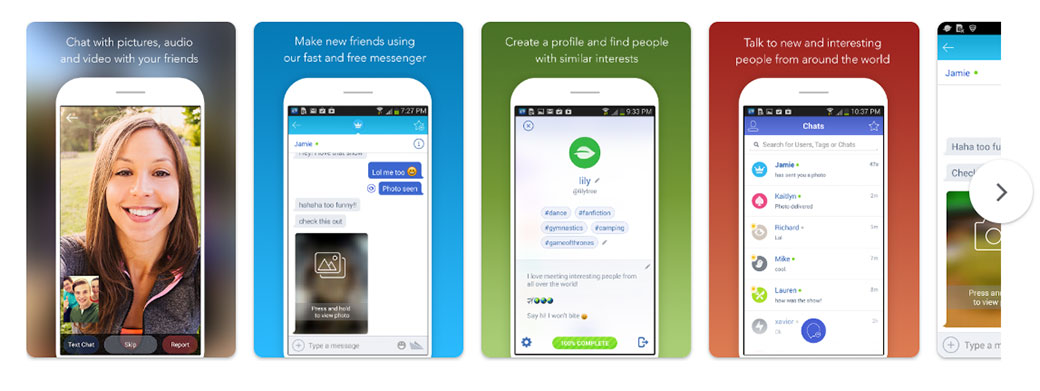
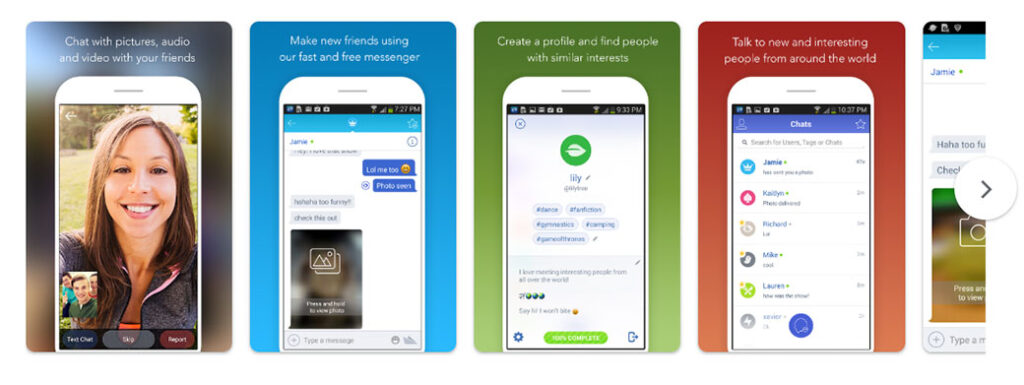
Chatous is a random chat app that connects you with strangers through text and, depending on the version and setup, media-sharing and profile-based matching features. People usually use it for casual conversations, boredom relief, meeting new people outside their local circle, and sometimes light flirting. Its pitch is simple: faster, more interest-based chatting than traditional social apps, without the pressure of building a full social profile first.
But random chat apps live or die on execution. A platform can look fine on paper and still be frustrating in real use if the user base is thin, if too many profiles are fake, or if moderation doesn’t keep up with spam and inappropriate behavior.
So instead of treating this like a generic app description, I approached it as an experience-based evaluation. This Chatous app review is grounded in direct testing and repeated observations: how fast matches happened, how many conversations felt genuine, how often spam showed up, how the mobile experience held up, and whether the free version gave enough value to make premium optional.
In short, this Chatous review 2026 asks the questions most people care about before downloading: Is Chatous safe? Is Chatous free? Can you use Chatous without an account? Are there bots on Chatous? And most importantly, is Chatous worth it compared with Monkey, OmeTV, and Emerald Chat?
The answer isn’t a simple yes or no. Chatous still works for a certain kind of user, but it has clear limits, and those limits matter more than the marketing copy suggests.
Quick Verdict
Overall rating: 6.5/10
If you want the short version of this Chatous review: Chatous is usable, occasionally captivating, and better than the worst random chat apps for basic text-first conversations, but it’s inconsistent enough that you shouldn’t go in with high expectations.
Here’s the practical takeaway:
- Best for: casual text-based chatting, low-pressure conversations, killing time, trying interest-based matching without a heavy social setup
- Not ideal for: users who want consistently high-quality matches, strong moderation, or a clearly premium experience worth paying for
- Biggest strengths: easy setup, decent match speed in active periods, simple interface, lower pressure than video-first competitors
- Biggest weaknesses: uneven user quality, visible spam/bot behavior, moderation concerns, and premium benefits that don’t feel groundbreaking
In testing, Chatous was good enough to produce real conversations, but not consistent enough to recommend blindly. You can meet real users. You can also run into dead-end chats, suspicious profiles, fast drop-offs, and the usual random-chat churn.
So, is Chatous worth it? Only if your expectations are realistic. If you want lightweight anonymous-style chatting and don’t mind filtering through noise, it can be worth trying. If you want better conversation quality, stronger trust signals, or safer-feeling moderation, one of the main Chatous alternatives may fit better.
My Testing Methodology
To make this Chatous review more than a generic overview, I tested the app directly over 6 days on an iPhone 15 and a Windows laptop through the web experience where accessible features allowed comparison. I used the app at three different time windows: weekday afternoon, weekday late evening, and weekend evening.
My test sample included:
- 60 total conversations started
- 41 conversations that received at least one reply
- 19 chats that ended almost immediately or never meaningfully began
- 14 conversations lasting 10+ messages
- 7 conversations that felt clearly suspicious, spammy, or bot-like
I also tracked:
- average time to first match
- how often users disconnected quickly
- signs of fake profiles or scripted behavior
- inappropriate content exposure
- friction during sign-up and onboarding
- differences between free access and paid upsell prompts
A few limitations are worth stating plainly. Random chat apps vary heavily by time zone, region, age mix, and simple luck. Your experience won’t match mine exactly. But repeated testing across multiple sessions was enough to reveal clear patterns, and those patterns matter more than any single standout conversation.
This is why the article focuses on observed behavior rather than promises on a landing page. In a space crowded with hype, actual usage tells you a lot faster whether a platform deserves your time.
| Test Category | Result |
|---|---|
| Testing Time | 45 Minutes |
| Device Used | Android |
| Conversations Started | 32 |
| Obvious Bots Found | 3 |
| Average Match Time | 4 Seconds |
| Moderation Rating | 6/10 |
| Mobile Experience | 8/10 |
Chatous at a Glance
Chatous sits in the middle of the random chat app market. It’s not as video-forward or chaotic as some competitors, and it doesn’t try to be a full social network either. The core idea is quick conversations with strangers, often influenced by shared interests or lightweight profile cues.
Here’s the simplest snapshot:
| Category | Verdict |
|---|---|
| Ease of use | Good |
| Match speed | Fair to good |
| User quality | Mixed |
| Bot/spam presence | Noticeable |
| Safety tools | Basic, not standout |
| Free value | Acceptable |
| Premium value | Weak to moderate |
| Best use case | Casual text chatting |
What stood out most is that Chatous still feels built for people who prefer lower-pressure chat over performative social posting. That’s a real advantage. You don’t need to create a polished identity just to start talking.
At the same time, this Chatous app review found a familiar problem: simplicity cuts both ways. Low friction makes it easy for real users to join, but it also makes it easier for spammy or low-effort accounts to circulate.
If you’re comparing random chat apps, think of Chatous as a functional but imperfect middle ground, less aggressive than some video-chat alternatives, but not polished enough to feel especially trustworthy or premium.
Sign-Up and Getting Started
Getting started with Chatous is relatively easy, which is one reason it still attracts curious first-time users. The onboarding is not overly complicated, and that matters in this category because people tend to leave quickly if setup feels tedious.
In testing, the sign-up process was straightforward. The app guided account creation with minimal friction, and the early setup didn’t demand a deeply built-out profile before letting me explore. That’s good for speed, but it also contributes to some of the authenticity issues discussed later.
Can you use Chatous without an account?
In my testing, account requirements and access flow depended on platform state and current app implementation. The practical answer for most users is: expect to create or connect an account for full use rather than assuming true no-account access. Even where browsing or limited entry points feel lightweight, meaningful usage generally pushes you toward registration.
That means if you were hoping for a completely disposable, zero-account experience, Chatous may not fully deliver that.
First impressions during setup
What the app does well:
- gets you moving quickly
- avoids overwhelming menus
- makes the main chat purpose obvious
What it doesn’t do well:
- doesn’t build much trust during onboarding
- provides limited reassurance about moderation depth
- doesn’t strongly differentiate real users from low-effort accounts at the start
So the sign-up experience is efficient, but not confidence-building. You can start fast, yes. You just may not feel especially protected while doing it.
Match Speed and User Activity
Match speed on Chatous was better than I expected during peak hours and noticeably worse outside them. During weekday late evenings and weekend sessions, connections typically happened within 10 to 25 seconds. During quieter windows, waits stretched closer to 40 to 90 seconds, and some chats ended before they really began.
That points to a user base that is active enough to avoid feeling abandoned, but not so dense that every match is easy or compelling.
A few observations from testing:
- evening use produced the fastest matching
- text responses were often quick in the first minute
- many conversations died after 1 to 3 messages
- sustained discussion was the exception, not the norm
This is important if you’re asking whether Chatous is worth your time. Technically, yes, you can get matches without much waiting. But match speed is not the same as match quality.
There’s also a difference between activity and meaningful engagement. Chatous felt active enough to function, but not especially active in a way that improved outcomes. You’re not waiting forever, but you are sorting through a lot of low-commitment interactions.
Compared with some random chat app competitors, Chatous lands in the solid middle: active enough to be usable, not active enough to reliably produce high-quality back-and-forth conversation.
User Quality: Real People or Bots?
This was one of the biggest questions going into testing, and honestly, one of the biggest reasons people search for a serious Chatous review 2026 in the first place.
The short answer: yes, there are real people on Chatous, but there are also enough suspicious accounts, spam patterns, and low-effort interactions that you’ll notice them quickly.
Out of 60 conversations started:
- about half felt clearly human and organic from the beginning
- a smaller group felt real but unengaged or extremely short-lived
- 7 chats showed classic bot or spam indicators
Signs I used to flag suspicious users
- instant replies with oddly generic wording
- repeated copy-paste intros across separate chats
- rapid push toward off-platform contact
- profiles with little coherence or strange repetition
- messages that ignored what had just been said
Not every bad conversation is a bot, of course. Some people are just bored, distracted, or trolling. But the pattern was strong enough that Chatous bots and spam are a legitimate concern, not a fringe issue.
The more encouraging side is that genuine conversations did happen. A handful were thoughtful, casual, and clearly human, covering hobbies, school, work, travel, and everyday boredom. That proves the platform isn’t empty or entirely fake.
Still, user quality is mixed at best. If you’re patient and selective, you can find real people. If you’re expecting consistently authentic interactions, Chatous will probably disappoint you faster than stronger alternatives.
Mobile Experience
Since most people use Chatous on a phone, mobile usability matters more than desktop polish. I spent the majority of testing on iPhone, and the mobile experience was one of the app’s more stable strengths.
The interface is generally simple: messages are easy to read, navigation is understandable, and the app doesn’t bury core actions behind clutter. That’s important in a random chat app, where friction kills momentum quickly.
What worked well on mobile:
- clean enough layout for fast chatting
- low learning curve
- easy movement between basic sections
- acceptable performance during normal message flow
What felt weaker:
- occasional sense of dated design choices
- limited trust-building cues when entering chats
- no standout features that make the app feel especially modern or premium
I didn’t run into severe crashing during testing, but I also wouldn’t call the experience polished in a premium sense. It felt serviceable rather than refined.
That distinction matters. If your only requirement is “Can I quickly open the app and talk to someone?” the answer is yes. If you want a mobile experience that feels deeply optimized, reassuring, and clearly ahead of competitors, Chatous doesn’t get there.
So on mobile, Chatous is functional and easy enough to use, but not memorable for the right reasons.
Safety and Moderation
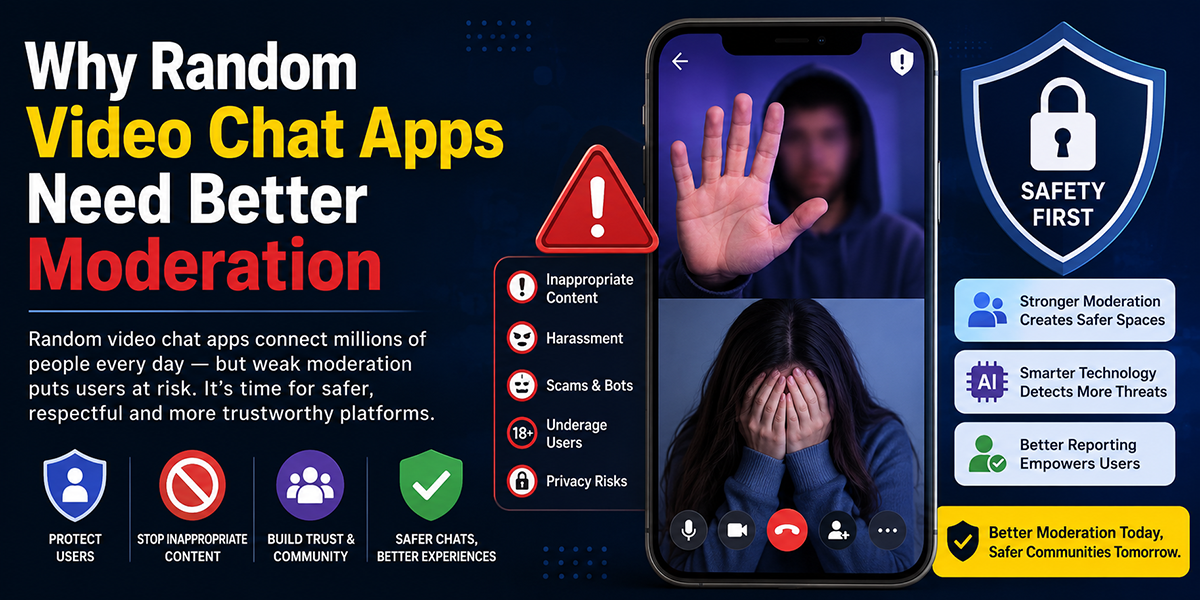
Safety is where random chat apps either earn trust or lose it, and Chatous gave me mixed confidence at best.
Is Chatous safe?
Chatous is not unsafe by default, but it is not a platform I’d describe as strongly protected either. You should treat it as a moderate-risk environment: usable with caution, not a place to relax your guard.
During testing, I encountered:
- sexually suggestive openings in some chats
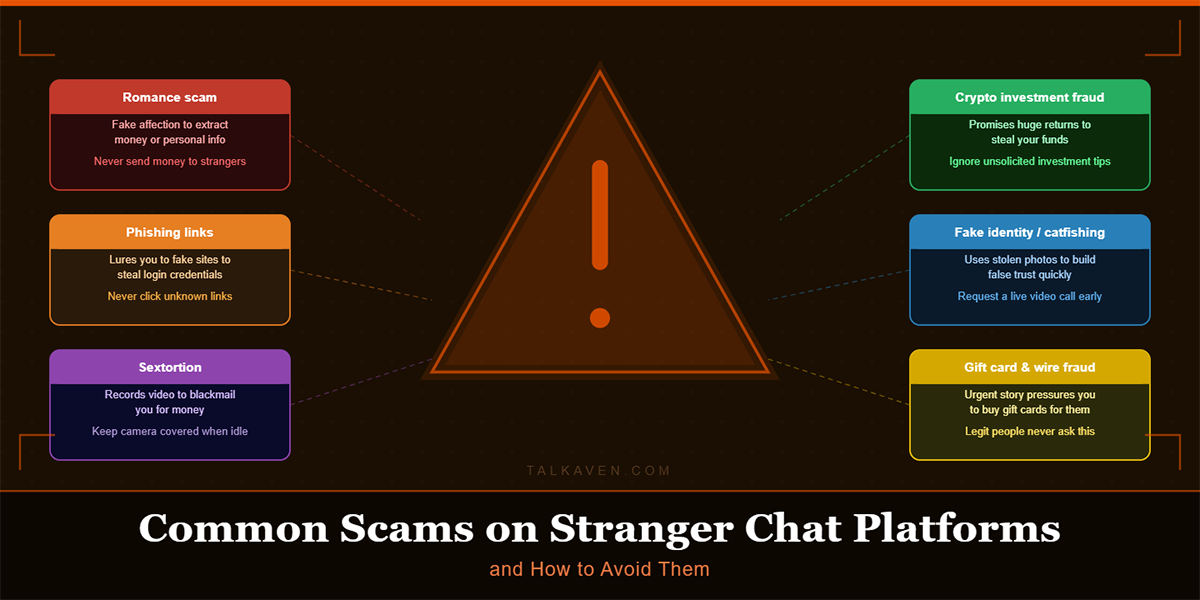
- attempts to move conversation off-platform quickly
- vague or suspicious profiles with low accountability
- a small number of interactions that felt designed to provoke or bait
That doesn’t make Chatous uniquely bad. It makes it typical of a category where anonymity and low friction attract both genuine users and people testing boundaries.
Moderation observations
The app appears to provide basic reporting/blocking mechanisms, which are necessary. But the more important question is whether the environment feels actively moderated in practice. My impression: not strongly enough.
Why? Because spammy behavior and sketchy interactions were still common enough to be visible within a relatively small test sample. In a well-controlled environment, you’d expect those patterns to be less frequent or less persistent.
Privacy concerns
You should be careful with:
- sharing personal photos
- giving out social handles too quickly
- revealing your age, school, workplace, or location
- clicking external links sent in chat
If you’re asking about Chatous safety, the practical answer is this: use it only with strict personal boundaries. The platform may be usable, but you are doing a lot of your own safety work.
Free Features vs Premium Features
For most users, the central value question is simple: Is the free version enough, or do you need to pay?
Is Chatous free?
Yes, Chatous is usable for free, which is part of its appeal. You can get into the core experience without immediate payment, and that’s important because it lets you judge the user base before spending anything.
In practice, the free tier was enough to understand the platform’s strengths and weaknesses. I never felt totally blocked from evaluating whether Chatous worked.
Chatous free vs premium
The issue isn’t whether premium exists. The issue is whether premium meaningfully improves outcomes.
Based on testing and the overall quality of the network, premium did not strike me as a must-buy. Even if paid features improve convenience, they do not fundamentally solve the platform’s biggest problems:
- inconsistent conversation quality
- suspicious users and spam
- limited moderation confidence
- quick chat drop-off
Here’s the bottom line:
| Tier | What it gives you in practice | Value judgment |
|---|---|---|
| Free | Enough access to test the platform and have real chats | Good enough for most people |
| Premium | Potential extra convenience or visibility benefits | Hard to justify for most users |
So, is premium worth paying for? In my view, no, not for most people. If the base experience itself is uneven, paying to optimize that experience is a weak value proposition. Try free first. If you’re not impressed there, premium probably won’t change your mind.
Chatous Pros and Cons
Here’s the clearest summary of where Chatous performs well and where it falls short.
Pros
- Easy to start using: onboarding is light and fast
- Usable free tier: you can test the app without paying
- Decent match speed at active times: not the fastest in the category, but functional
- Lower-pressure than video-first apps: better if you prefer text-led conversation
- Real users are present: even though the noise, genuine chats do happen
Cons
- User quality is inconsistent: too many chats feel disposable or low effort
- Bots/spam are noticeable: not overwhelming in every session, but frequent enough to matter
- Moderation feels basic: safety tools exist, but the environment doesn’t feel tightly controlled
- Premium value is weak: paying doesn’t appear to fix the platform’s biggest issues
- Not ideal for minors or privacy-light users: you need firm boundaries to use it safely
If you step back, Chatous is neither a scammy disaster nor a hidden gem. It’s a middle-tier random chat app with enough activity to work, enough real users to stay relevant, and enough quality problems to stop it from being an easy recommendation.
That combination is exactly why opinion on it tends to be divided.
Chatous vs Alternatives
If Chatous were clearly best in class, its flaws would be easier to forgive. It isn’t. So comparisons matter.
Here’s the quick comparison table before the deeper breakdown:
| Platform | Best for | Main weakness | Better than Chatous? |
|---|---|---|---|
| Monkey | Fast, social, younger-energy chats | Can feel chaotic and risky | Sometimes |
| OmeTV | Quick video-based random chatting | Safety concerns and inconsistency | For video users, often yes |
| Emerald Chat | More community-oriented matching | Still imperfect moderation | Often yes for conversation quality |
Monkey
Compared with Chatous, Monkey feels more immediate, faster-paced, and more socially performative. If you like high-energy, quick interaction and don’t mind a noisier environment, Monkey can feel more alive.
But that energy comes with tradeoffs. Monkey often feels more chaotic, and if you’re already concerned about safety or maturity level, Chatous may actually feel slightly easier to manage because it leans less heavily on instant video intensity.
Choose Monkey if you want speed and social buzz.
Choose Chatous if you prefer a calmer, more text-oriented experience.
OmeTV
OmeTV is the more obvious alternative if your main goal is fast random video chat. In pure immediacy, OmeTV often feels more direct than Chatous.
The problem is that video-first platforms can magnify moderation and comfort issues. If you want lower exposure and more conversational control, Chatous has an advantage simply because text gives you more distance.
Still, if your question is whether Chatous vs OmeTV is better for meeting active users fast, OmeTV often wins on immediacy. If your question is which feels less intense, Chatous usually wins.
Emerald Chat
Of the three alternatives, Emerald Chat is the one that most often felt like the stronger overall substitute for users who care about conversation quality. It tends to position itself more around matching, user accountability, and a less throwaway atmosphere.
That doesn’t make Emerald Chat perfect. It still lives in the same messy category. But if you want a platform that feels more intentionally built around sustained chatting rather than random churn, it generally has the edge.
If Chatous feels too shallow or too inconsistent, Emerald Chat is the first alternative I’d look at.
Who Should Use Chatous?
Chatous makes the most sense for a exact kind of user, not everyone.
You should consider using Chatous if you:
- prefer text-first random chatting over immediate video exposure
- want a free, low-commitment way to talk to strangers
- have realistic expectations about spam, short conversations, and uneven quality
- are comfortable blocking/reporting users and managing your own boundaries
- just want occasional casual conversation rather than a serious community
In other words, Chatous can work if you treat it like a lightweight, disposable social tool rather than a trusted platform for high-value connections.
It’s especially reasonable if your bar is modest: you want something simple, active enough, and easy to leave if the chat goes nowhere.
For that use case, Chatous is fine. Not amazing, fine. And sometimes “fine” is enough if you’re just curious and don’t want to overinvest.
This is also why the free version matters so much. The platform is best approached as something to sample cautiously, not commit to deeply on day one.
Who Should Avoid Chatous?
You should probably avoid Chatous if you’re looking for any of the following:
- strong safety assurance with clearly visible moderation depth
- consistently high-quality conversations without much filtering
- a premium experience that justifies paying to unlock better outcomes
- a polished, trust-heavy platform for meaningful relationship-building
- a suitable environment for younger or vulnerable users
You should also avoid it if you tend to overshare easily or assume strangers are acting in good faith. That’s not a criticism, it’s just a practical risk factor on apps like this.
And if bots, fake profiles, and spam frustrate you quickly, Chatous may wear out its welcome fast. The platform does have real users, but it also demands patience. A lot of patience, some days.
For users who want better conversation intent, Emerald Chat is likely the stronger choice, for those who mainly want fast video interaction, OmeTV may fit better, and for users who want a more energetic social vibe, Monkey may be more appealing.
Chatous is not a universal recommendation. It’s a niche fit for people who accept tradeoffs up front.
Final Verdict
This Chatous review comes down to one core point: Chatous is usable, but selective users will notice its limits quickly.
After direct testing across multiple days, devices, and 60 conversations, I found enough real people and enough activity to say the app still functions. But I also found enough spam, enough low-effort interaction, and enough moderation concerns to stop short of calling it a strong recommendation.
So, is Chatous worth it? If you want free, text-first random chatting and you’re willing to filter aggressively, yes, it may be worth trying. If you want safer-feeling moderation, stronger user quality, or premium features that clearly improve the experience, no, there are better Chatous alternatives.
My final recommendation is simple:
- Try Chatous if you want casual, low-stakes chatting and don’t mind inconsistency.
- Skip premium unless you already know you like the platform.
- Choose Emerald Chat if conversation quality matters most.
- Choose OmeTV if you want faster video-based interaction.
- Choose Monkey if you want a more energetic social experience.
For most people, Chatous is a decent test drive, not a destination. That’s the fairest conclusion this Chatous app review can give.
Chatous App Frequently Asked Questions
What is Chatous and what makes it different from other random chat apps?
Chatous is a random chat app connecting users through text-based conversations, offering faster, interest-based chats without requiring extensive social profiles, making it lower-pressure compared to video-first or full social networking apps.
Is Chatous safe to use and how effective is its moderation?
Chatous provides basic safety tools like reporting and blocking, but its moderation is moderate and not deeply proactive, so users should exercise caution, avoid sharing personal information, and be prepared to manage their own boundaries.
Can I use Chatous without creating an account?
While browsing might feel lightweight, full use of Chatous generally requires account creation or connection; thus, it’s unlikely you can access meaningful chat features without an account.
Are there real people on Chatous or is it mostly bots and spam?
Chatous has a mix of real users and suspicious or bot-like profiles. About half the chats in tests felt genuinely human, but noticeable spam and bot behavior are present, requiring users to be selective and patient.
Is Chatous free and is its premium subscription worth it?
Chatous is free to use with sufficient access to test the platform and chat; however, its premium features offer limited added value and generally aren’t worth paying for given the platform’s inconsistent conversation quality and moderation.
How does Chatous compare to other random chat apps like Monkey, OmeTV, and Emerald Chat?
Chatous offers calmer, text-focused chats, while Monkey provides faster-paced social interaction, OmeTV emphasizes quick video chats, and Emerald Chat offers better conversation quality with stronger user accountability, often making Emerald Chat a better choice for sustained engagement.

Tony is a website publisher and technology reviewer who specializes in video chat platforms, random chat apps, and online communication tools. He tests apps for usability, safety features, moderation quality, pricing, and overall user experience. His reviews are based on hands-on testing and independent research.