


Finding a video chat app that works well across countries is harder than it should be. Some apps feel empty. Others push payments too fast. Many struggle with call quality once you move beyond strong local networks. That’s where this Tango review matters.
Tango positions itself as more than a basic video chat app. It blends live video, social discovery, messaging, gifts, and creator driven features into one platform. For global users, that mix sounds appealing. You get more ways to meet people, stay engaged, and keep conversations going beyond a single call.
But features alone do not make an app worth using. You need stable performance, fair pricing, clear safety controls, and a community that feels active in your region. You also need to know where Tango shines, where it frustrates, and whether its paid features improve the experience or simply add pressure to spend.
This Tango review looks at the app from a global user perspective. You’ll see what Tango offers, how the interface feels, where the platform performs best, and who should skip it. If you want a video chat app that balances entertainment, discovery, and live interaction, this breakdown will help you decide faster.
At a Glance
Tango is a social video chat app built around live interaction. Instead of focusing only on one to one calls, it mixes video chat with livestreams, messaging, virtual gifting, and user discovery.
Here’s the short version of this Tango review.
| Category | Verdict |
|---|---|
| Best for | Users who want video chat plus social discovery |
| Core experience | Live video, messaging, streams, gifts, and meeting new people |
| Ease of use | Easy to start, but busy once you explore deeper features |
| Global usability | Stronger in active regions, less compelling in quieter markets |
| Pricing model | Free to start, with heavy in app purchase pressure |
| Safety tools | Present, but experience depends on moderation quality |
| Overall | Worth trying if you want a social video app, less ideal if you want simple private calling |
The key thing to understand is this. Tango is not trying to be a pure calling tool like Zoom, Google Meet, or WhatsApp. It is trying to keep you inside the app longer through interaction and entertainment. If that matches what you want, Tango feels more useful. If you only want clean private video calls, the extra layers may feel distracting.
What Tango Offers
Tango offers a broader social package than many video chat apps. The app centers on meeting people, chatting live, following creators, and spending time in an active feed.
Core features
- One to one video chat
- Text messaging
- Livestream viewing and hosting
- Social discovery tools
- Virtual gifts and in app currency
- Profile based interaction
- Creator and audience engagement features
What stands out
The strongest part of Tango is how many ways you have to interact. You are not limited to sending a message and waiting. You can browse live sessions, join conversations, follow users, and move between public and private engagement.
That matters if you enjoy active communities. A static app gets old fast. Tango tries to solve that with a constant flow of people and live content.
Where the experience shifts
The app experience changes based on your goal.
If you want to:
- Meet new people, Tango has useful discovery features.
- Watch live creators, Tango gives you plenty to browse.
- Build an audience, Tango offers monetized engagement paths.
- Make private calls only, Tango may feel crowded.
This distinction shapes the whole Tango review. On paper, the feature list is strong. In practice, the value depends on whether you want a social network with video chat built in, or a video chat app with a few social tools. Tango is much closer to the first option.
Pricing, Plans, and In-App Purchases
Tango is free to download, which lowers the barrier to entry. You can create an account, explore profiles, watch some content, and start using core features without paying upfront.
The catch is the monetization model. Tango leans hard on in app purchases.
What you may pay for
- Coins or virtual currency
- Gifts for creators or users
- Premium visibility or engagement perks
- Access tied to certain interactions or status signals
What this means for you
Free users can still use Tango, but you will notice the app nudging you toward spending. Those prompts are part of the product design, not a side detail.
This is common in social video platforms, yet Tango makes monetization more visible than many users expect. If you dislike apps that interrupt the flow with spending cues, that will affect your experience.
Value assessment
| Pricing factor | What to expect |
|---|---|
| Entry cost | Free |
| Ongoing optional spend | High potential |
| Pressure to spend | Moderate to high |
| Best value for paid users | Users who engage often with creators or social gifting |
| Best value for free users | Casual browsing and light interaction |
Tango works best when you set your limits early. If you go in without a budget, in app purchases can stack up fast. If you treat premium spending as optional entertainment, the app feels easier to manage.
How We Evaluate Tango
This Tango review focuses on what global users care about most. Not marketing claims. Not feature lists alone. Real usability.
We looked at Tango through five practical lenses.
1. Everyday usability
How easy is it to sign up, start chatting, browse features, and understand what the app wants you to do next?
2. Video quality
Does the app hold up during live interaction, or does quality drop once conditions are less than ideal?
3. Social value
Are there enough active users and useful discovery tools to make the app worth opening again?
4. Safety and trust
Do reporting, blocking, privacy, and moderation tools feel meaningful or superficial?
5. Global consistency
Does Tango perform well across different devices, network conditions, and regions?
This matters because some apps look strong in one market and weak in another. A global user needs more than isolated performance. You need an app that still works when your region has fewer users, slower mobile data, or different device habits.
User Experience and Interface
Tango is easy to enter and harder to master. The basic actions are clear enough. You sign up, build a profile, browse live content, and start interacting. The challenge comes from the app’s density.
First impression
The interface feels modern, colorful, and engagement driven. You will quickly see live content, profiles, notifications, and prompts to interact. That creates momentum fast.
For some users, this feels lively. For others, it feels busy.
Navigation
The main navigation is built around discovery and activity, not minimalism. That means you usually have something to tap, watch, send, or follow.
This helps if you want entertainment. It hurts if you want a clean path to a private call.
Learning curve
Most users will understand the basics quickly, but deeper parts of the app take longer.
Examples include:
- Gift systems
n- Creator interactions
- Visibility mechanics
- Social ranking signals
- Paid engagement features
Once you spend more time in Tango, the layout makes more sense. Early on, though, the app can feel like it wants your attention from every direction.
UX verdict
Tango succeeds at keeping the experience active. It is less successful at feeling calm and streamlined. If you enjoy social apps with lots happening at once, this works in Tango’s favor. If you prefer simple interfaces, it may wear on you over time.
Video Chat Quality and Reliability
For a video app, this is where expectations get serious. If calls lag, freeze, or drop too often, extra features do not matter.
Call quality
Tango delivers acceptable to good video chat quality under normal mobile and Wi Fi conditions. In stronger networks, the app usually supports a smooth enough conversation for casual social use.
It is not positioned as a premium work meeting platform, and the experience reflects that. Tango prioritizes social interaction over polished enterprise level calling.
Reliability in real use
The app performs best when:
- Your connection is stable
- Your device is reasonably current
- The other user also has solid network conditions
Quality becomes less predictable in weaker environments. That is not unique to Tango, though users looking for dependable international calling should keep expectations realistic.
Practical takeaway
Tango’s video quality is good enough for social chat, creator interaction, and casual live use. If your priority is mission critical calling, long business sessions, or consistently polished international communication, other apps are more dependable.
That does not make Tango weak. It means the app serves a different purpose.
Social Discovery and Community Features
This is the section where Tango separates itself from standard video chat apps.
Tango is built to help you find people, join live spaces, and stay active inside a community. The app does not rely on your existing contact list alone. It wants you to meet new users and engage often.
Discovery tools
You can browse profiles, explore streams, follow users, and move between public and private interaction paths. That makes Tango feel more ever-changing than a contact based calling app.
Community energy
In active regions, Tango has real momentum. There is more to see, more people to respond to, and more reason to keep using the app. This gives the platform a social stickiness many video chat apps lack.
Limits of the model
Community quality is uneven. Some spaces feel authentic and active. Others feel transactional, especially where gifting and monetized attention drive behavior.
That is the tradeoff.
You get:
- More activity
- More discovery
- More variety
You also get:
- More noise
- More spending cues
- More uneven interaction quality
If you like social exploration, Tango’s community features are one of its strongest selling points. If you want direct, low friction conversation without the surrounding feed, these same features may feel like clutter.
Safety, Privacy, and Moderation
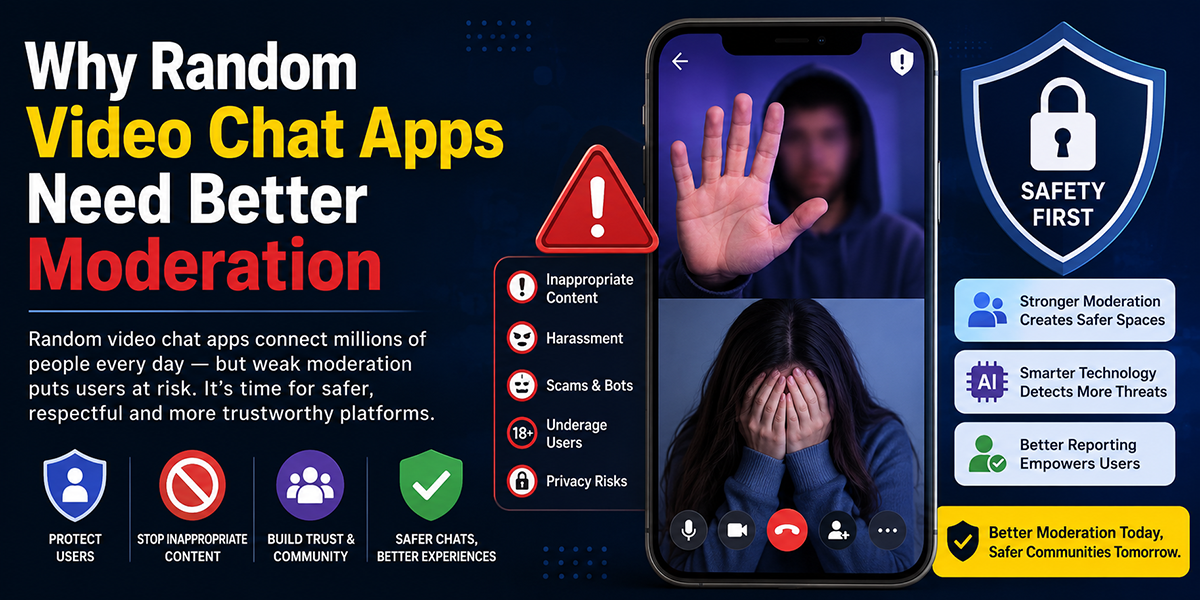
Safety matters more in discovery based apps. When a platform encourages meeting strangers, weak moderation becomes a serious problem fast.
Safety tools you should expect
Tango includes the standard protections most users look for:
- Blocking
- Reporting
- Account controls
- Privacy settings
Those tools are necessary, but tools alone are not enough. Response speed and moderation consistency matter more.
The real issue
In apps built around live interaction and social discovery, moderation is always under pressure. Volume is high. User behavior changes fast. Context is messy.
That means your experience with safety may vary based on:
- Region
- Time of day
- Local activity levels
- Moderator responsiveness
Privacy considerations
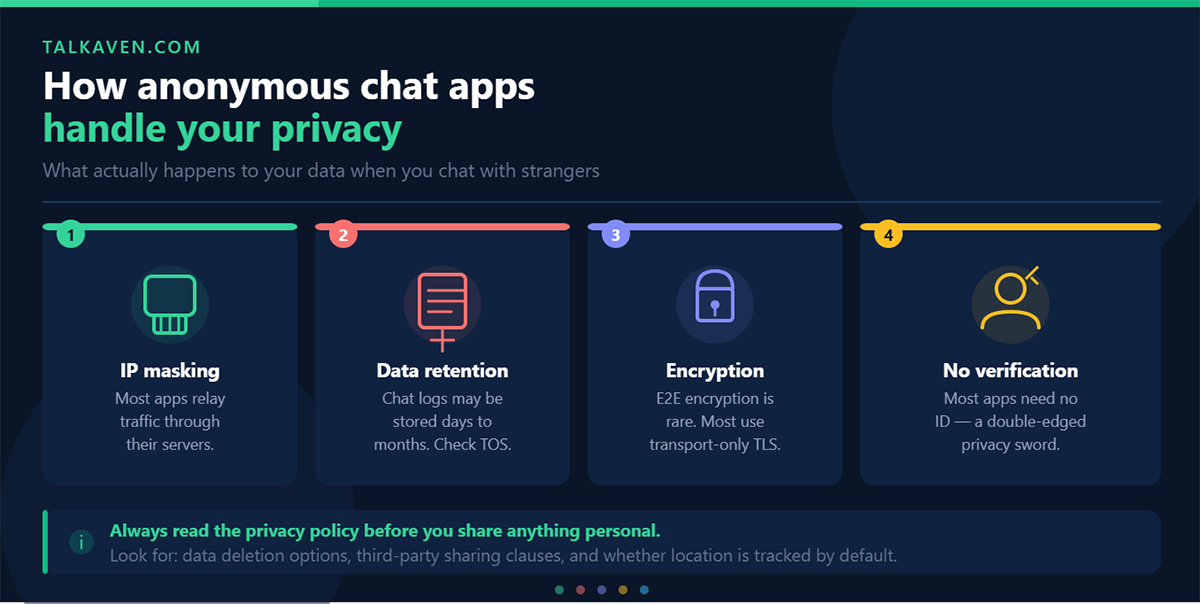
Before using Tango heavily, check what information your profile exposes, what content is public, and how visible your activity is. Discovery apps often encourage openness by default, and many users share more than they intended.
Safety verdict
Tango gives you the basic controls you need, but you should use them actively. Keep your profile limited at first. Be selective with private interaction. Report suspicious behavior early. On a platform like Tango, your own caution is part of the safety system.
Performance Across Devices and Regions
This is one of the biggest factors for a global audience. A video chat app is only useful if it performs well where you live and on the device you already own.
Device performance
Tango runs better on newer phones with stronger processors and stable memory performance. On older devices, you may notice slower loading, more interface friction, or weaker multitasking during live features.
That is especially important because Tango is not a lightweight app experience. It carries social, live, and transactional features together, which adds load.
Regional variation
Tango is more compelling in regions where the user base is active. In stronger markets, discovery feels natural because there are enough people and live sessions to sustain interest.
In weaker markets, the app may still function well technically, but the social value drops. A social video platform without enough local or relevant activity loses momentum quickly.
Global user takeaway
Before investing time or money in Tango, test three things first:
- How stable the app feels on your device
- How active the local or language based community is
- Whether your network quality supports live use comfortably
This matters more than the feature list. Even a strong app feels weak if your region lacks activity or your device struggles to keep up.
Pros and Cons
Here is the practical summary of Tango’s strengths and weaknesses.
| Pros | Cons |
|---|---|
| Strong mix of video chat and social discovery | Interface can feel crowded |
| Active live and creator driven features | In app purchase pressure is noticeable |
| Good for meeting new people | Community quality is uneven |
| Free to start | Best experience may depend on region |
| More captivating than basic calling apps | Less ideal for users who want simple private calling |
| Multiple interaction formats in one app | Safety experience depends heavily on moderation consistency |
The pattern is clear. Tango is strongest when you want variety, discovery, and active social interaction. It is weakest when you want simplicity, predictability, and a low pressure communication tool.
How Tango Compares With Other Video Chat Apps
Tango sits in a different category from pure calling apps, but comparison still helps.
| App | Best for | How it compares to Tango |
|---|---|---|
| Private messaging and calling | Better for direct contact based communication, weaker for discovery | |
| Zoom | Meetings and work calls | Far better for professional reliability, not designed for social discovery |
| Google Meet | Simple scheduled video calls | Cleaner and more practical for meetings, less captivating socially |
| Bigo Live | Live streaming and creator interaction | Closer to Tango in social entertainment style |
| Azar | Meeting new people by video | More focused on matching, Tango offers broader community features |
The real competitive position
Tango is best understood as a hybrid app. It mixes parts of live streaming, social networking, and video chat. That gives it broader appeal than a simple calling tool, but it also means it loses some focus.
Choose Tango if you want:
- Ongoing social activity
- Discovery beyond your contacts
- A mix of live content and chat
Choose another app if you want:
- Stable business calls
- Cleaner private communication
- Less monetized interaction
That is the clearest takeaway from this Tango review. The app competes best in social entertainment, not pure communication.
Who Tango Is Best For
Tango is not for everyone, and that is fine. The app works best for a exact type of user.
Tango is a strong fit if you:
- Enjoy meeting new people online
- Like livestreams and creator communities
- Want more than one to one calling
- Do not mind a busy social interface
- Are comfortable managing in app spending
Tango is a weaker fit if you:
- Want a private family or work calling app
- Prefer clean and minimal design
- Dislike gift based or monetized social systems
- Need highly reliable communication in weaker network conditions
- Want a platform with fewer distractions
For the right user, Tango feels lively and flexible. For the wrong user, it feels noisy and expensive. Matching your expectations to the app’s true purpose is the difference between enjoying Tango and uninstalling it quickly.
Final Verdict
Tango is worth using if you want a social video chat app, not a plain communication tool. That distinction matters.
This Tango review shows an app with clear strengths. It offers active discovery, multiple ways to interact, and a community driven experience that feels more captivating than standard calling platforms. For global users who enjoy live social spaces, Tango has real appeal.
It also has clear tradeoffs. The interface is busy. Monetization is hard to ignore. Safety and community quality vary. And the app makes the most sense in regions where user activity is already strong.
So, is Tango worth using? Yes, for users who want social connection, creator interaction, and video chat in one place. No, for users who want simple, private, low friction calls.
If you fit the first group, Tango is worth a test. Start free. Check local activity. Set spending limits early. Then decide whether the app earns a place on your phone.
Frequently Asked Questions about Tango Video Chat App
What is Tango and what features does it offer?
Tango is a social video chat app that combines live video, messaging, livestreams, social discovery, virtual gifting, and creator engagement into one platform for a more interactive experience.
How does Tango differ from other video chat apps like Zoom or WhatsApp?
Unlike Zoom or WhatsApp, which focus on private calls or meetings, Tango emphasizes social discovery and entertainment, blending video chat with live interaction and creator-driven content.
Is Tango free to use, or are there costs involved?
Tango is free to download and use, but it includes heavy in-app purchase pressure for virtual gifts, coins, and premium engagement features, making ongoing spending likely for active users.
How is the video call quality on Tango?
Tango offers acceptable to good video quality in stable network conditions, suitable for casual social use, but it’s less reliable for mission-critical or professional business calls.
Are there safety features available on Tango?
Yes, Tango provides tools like blocking, reporting, privacy settings, and account controls, but the safety experience can vary depending on moderation quality and user caution.
Who is the ideal user for Tango?
Tango is best for users who enjoy meeting new people, participating in live streams, engaging with creator communities, and want a social app beyond simple private video calls.

Tony is a website publisher and technology reviewer who specializes in video chat platforms, random chat apps, and online communication tools. He tests apps for usability, safety features, moderation quality, pricing, and overall user experience. His reviews are based on hands-on testing and independent research.