



If you’re looking for a real Mico review instead of another recycled app-store summary, this is for you. Mico is a social discovery and video chat app built around meeting strangers, joining live rooms, and starting one-on-one conversations. On paper, that sounds familiar. Plenty of apps promise fast matches, global chatting, and new friendships. The real question is whether Mico actually delivers, or whether it’s mostly bots, paywalls, and awkward dead-end chats.
That’s why I tested it directly for this Mico review 2026. Rather than listing every feature in the app, I focused on the parts most people actually care about before downloading: how quickly you get matched, whether the profiles seem real, how the video chat quality holds up, what safety tools are available, and whether the free version is usable without immediately pushing you into paid upgrades.
I also paid close attention to one issue lightweight reviews usually skip: fake profile presence. A video chat app can look slick and still be a waste of time if too many conversations feel scripted, transactional, or suspicious. So I spent time checking profile patterns, response quality, moderation signals, and the reporting flow to see whether Mico is legit, whether Mico is safe, and whether you can genuinely make friends here.
Just as important, I’m not reviewing Mico in isolation. To help you decide if it’s the right app for you, I benchmarked it against close alternatives people actually compare it with: Monkey, Chatous, and OmeTV. That gives you a better sense of where Mico stands on speed, authenticity, safety, and value.
By the end of this Mico app review, you’ll know who Mico works best for, who should skip it, whether Mico free vs paid makes sense, and whether premium is worth spending money on in 2026.

Mico at a Glance
If you want the short version of this Mico review, here it is: Mico is a usable but uneven social discovery app that feels more like a hybrid between live social streaming and random video chat than a pure friend-making platform. You can meet people fairly quickly, but the quality of those interactions varies a lot.
Quick Summary Table
| Category | My Take | Rating |
|---|---|---|
| Ease of signup | Fast and simple | 8/10 |
| Match speed | Usually quick | 8/10 |
| User quality | Mixed: real users present, but some low-quality or suspicious profiles | 5.5/10 |
| Video/audio quality | Decent on stable Wi-Fi | 7/10 |
| Free version | Usable, but limited and nudges upgrades | 6/10 |
| Paid value | Situational: only worth it for frequent users | 5.5/10 |
| Safety tools | Basic but not best-in-class | 6/10 |
| Moderation confidence | Moderate at best | 5.5/10 |
| Overall experience | Entertaining, but inconsistent | 6.5/10 |
Mico at a peek
| Item | Details |
|---|---|
| Best for | Casual social discovery, light video chatting, meeting international users |
| Not ideal for | Deep conversations, strong moderation, or a highly curated community |
| Platform | Mobile app |
| Main experience tested | Profile browsing, matching, text chat, one-on-one video chat, reporting tools |
| Biggest strength | Fast access to people and conversations |
| Biggest weakness | Variable user quality and noticeable monetization pressure |
My overall verdict in this Mico review 2026 is simple: Mico is not a scam app, but it can absolutely feel like a time sink if you go in expecting consistent, authentic conversations from every match. Some chats felt genuine. Others felt low-effort, transactional, or hard to trust.
If your goal is casual social discovery and you’re comfortable filtering aggressively, Mico can be interesting. If you want the cleanest experience, strongest safety setup, or the highest confidence in profile authenticity, there are better alternatives.
How I Tested Mico
To make this Mico app review useful, I approached it like a real user would, not like a feature catalog writer. I installed the app, created a standard account, completed enough profile information to look active and credible, and then spent multiple sessions using the app at different times of day.
Testing methodology
I focused on the exact questions you’re probably asking:
- Is Mico legit or a waste of time?
- How many fake profiles are on Mico?
- Is Mico safe to use?
- Can you do anything useful on the free version?
- Is premium worth it?
- How does it compare with Monkey, Chatous, and OmeTV?
During testing, I evaluated:
- Signup friction: how fast you can join and start using core functions.
- Match speed: how long it takes to find people to chat with.
- User quality: whether users seem real, responsive, and interested in conversation.
- Fake profile indicators: repetitive intros, odd engagement patterns, profile sparsity, and unnatural messaging behavior.
- Video and audio quality: connection stability, lag, sync, and call clarity.
- Free vs paid usability: whether you can realistically use Mico without spending.
- Safety and moderation: reporting tools, blocking tools, account signals, and visible community controls.
I did not treat every profile as fake just because it looked polished. And I also didn’t assume every completed profile was genuine. Instead, I looked for patterns: repetitive replies, unusually fast escalation, requests to move off-platform too quickly, and accounts that felt designed to trigger spending rather than conversation.
That matters because a review can say “lots of users” and still miss the point. What you want to know is whether those users feel real enough, and safe enough, to make Mico worth your time.
Signing Up and Getting Started
Getting started on Mico was easy. The onboarding flow is clearly built to get you into the app fast, which is good for convenience but also says something about the platform’s priorities: speed first, depth later.
You can move through account creation without much resistance, add profile basics, upload photos, and begin exploring quickly. From a usability standpoint, that’s a win. If you’re someone who hates long verification funnels or endless setup screens, Mico feels refreshingly direct.
But there’s a tradeoff. In this Mico review, one of the first things I noticed was that lightweight onboarding can also mean less confidence in the average profile you encounter later. When joining is easy, the barrier for low-effort or questionable accounts is lower too.
The first-time interface is busy, though not impossible to understand. You’ll likely notice a mix of discovery prompts, social features, and monetization cues early on. It doesn’t feel minimal. It feels designed to keep you moving, tapping, and exploring. That can be fun at first, but it also creates a slightly noisy first impression.
Still, from a pure setup perspective, Mico performs well:
- Signup is quick
- Core navigation is learnable without much effort
- You can start browsing and chatting fast
- The app doesn’t make the first session feel complicated
My read: onboarding is one of Mico’s stronger areas. You won’t struggle to get in. The bigger question is what happens after those first few minutes, whether the people and conversations justify staying.
My Experience Using Mico
Using Mico for several sessions gave me a clearer picture than the app’s marketing ever could. It’s active enough to be entertaining, but the experience swings a lot depending on who you encounter, when you log in, and how patient you are with filtering.
At its best, Mico feels spontaneous. You can jump into conversations quickly, browse profiles, and get that “something might happen” energy that makes social discovery apps compelling. At its worst, it feels cluttered, heavily gamified, and full of interactions that don’t go anywhere.
The app is not dead, and that matters. There are enough people around to create momentum. But that doesn’t automatically mean the quality is high. The rest of this section breaks down what stood out most during testing.
Match Speed
Match speed was one of the better parts of the app. In my testing, it generally didn’t take long to find someone available for interaction. That gives Mico an immediate advantage over smaller social apps where you spend more time staring at loading states than actually talking to anyone.
If your main priority is getting into chats quickly, Mico is competent. It creates the impression of activity, which is important in this category. A video chat app lives or dies by momentum, and Mico usually had enough user presence to keep things moving.
That said, fast matching and good matching are not the same thing.
A quick conversation can still be low quality, one-sided, or suspicious. I had sessions where matches appeared fast but felt shallow, with minimal engagement or messages that seemed copied and pasted. So yes, Mico is efficient at connecting you with people. No, that doesn’t guarantee those connections are worth much.
Compared with alternatives, Mico sits in a solid middle-to-upper tier for speed:
- Faster feeling than Chatous in terms of instant social momentum
- Less chaotic than Monkey at points
- Not as purely immediate as OmeTV’s stripped-down random format
Bottom line: if you’re asking is Mico worth it purely for chat availability, the answer leans yes. If you’re asking whether fast access consistently leads to meaningful conversation, that answer is much more mixed.
User Quality
This is where the Mico review gets less flattering.
There are real users on Mico. I want to be clear about that. Some conversations felt normal, spontaneous, and completely believable. A few profiles had enough detail and natural interaction patterns to inspire confidence. So if you’re wondering is Mico legit, the app does appear to have a genuine user base.
But the quality of that user base is inconsistent.
I ran into a noticeable layer of profiles that felt low-effort, hard to verify, or suspiciously optimized for attention rather than conversation. Common patterns included:
- Sparse profiles with attractive photos but little personality
- Repetitive greetings or oddly generic responses
- Fast pressure to keep captivating without much actual rapport
- Interactions that felt transactional or engagement-driven
That doesn’t automatically mean every questionable account is fake. Some users are just bad at conversation. But if you’re specifically worried about Mico fake profiles, that concern is valid. I wouldn’t describe the app as overrun beyond use, but I also wouldn’t trust the average profile at face value.
My practical advice: assume you’ll need to filter aggressively. Look for profile depth, conversational specificity, and consistency over time. The users worth talking to are there, but you may need to sift through a fair amount of noise to find them.
That’s really the defining issue with Mico: enough authenticity to keep you trying, enough questionable activity to keep you cautious.
Video and Audio Quality
Video and audio quality were better than I expected, though not flawless. On a stable connection, calls were generally usable and clear enough for casual conversation. I didn’t run into constant breakdowns, which already puts Mico ahead of some smaller or less polished social video apps.
Video quality looked acceptable rather than premium. You’re not getting some ultra-refined, conference-call-grade experience here. This is a social app, and the call quality reflects that. Faces were visible, motion was mostly smooth, and the experience felt functional when the other person also had a decent connection.
Audio held up reasonably well in most tests. Minor lag and compression showed up occasionally, but not so often that it ruined the experience. The bigger issue wasn’t the tech, it was the variability of users’ own environments. Some calls were perfectly understandable. Others had poor lighting, background noise, or weak mobile data.
What stood out most was consistency. Mico didn’t feel spectacular, but it did feel mostly serviceable. That’s often enough in this category.
I’d rate it like this:
- Video clarity: solid for casual chatting
- Audio reliability: generally fine, occasional quality dips
- Connection stability: acceptable, depends heavily on both sides
- Overall: good enough to support the app’s core use case
So if you’re choosing based on call quality alone, Mico passes. It’s not the best reason to use the app, but it’s not a major reason to avoid it either.
Mobile App Performance
The app itself performed reasonably well during testing. Navigation was mostly smooth, and I didn’t run into the kind of constant crashing or severe freezing that makes an app feel abandoned. That’s an important baseline, especially for a social platform where users are already deciding within minutes whether to stay.
There is, but, a lot going on in the interface. Mico feels feature-stacked and monetization-aware, so the experience can sometimes seem visually busy. Not broken, just crowded. If you prefer ultra-clean app design, this probably won’t be your favorite environment.
In day-to-day use, performance was fine enough:
- Menus loaded without major delay
- Chat transitions were mostly smooth
- Calls launched without unusual friction
- Notifications and prompts occasionally felt excessive
Battery use and heat were fairly typical for a video-heavy social app. In other words, not ideal, but not alarming. Long sessions will obviously hit your battery harder than text-only apps.
The bigger usability issue is cognitive load, not technical stability. You may need a little time to adjust to the app’s layout and incentives. Once you do, it becomes easier to navigate. But first-time users may still feel that Mico is trying to show them too much at once.
Overall, the app is stable enough to support real use. It doesn’t feel especially elegant, though. It feels functional, moderately polished, and a little too eager to keep your attention.
Mico Features I Actually Used
Instead of dumping a giant feature list, this part of the Mico app review sticks to what I actually used in testing.
Profile browsing and discovery
This is central to how Mico works. You spend time scanning profiles, checking photos, reading limited bio information, and deciding who seems worth captivating. It’s easy to use, but it also highlights the app’s biggest weakness: presentation often outpaces trust. Some profiles look polished yet reveal very little.
Text chat
Text chat was functional and quick to access. It works well enough for light conversation and initial filtering. In practice, text chat became one of the best ways to identify low-quality users before wasting time on video. If someone can’t hold a normal short exchange, that’s useful information.
One-on-one video chat
This is the feature most people care about, and it’s the reason Mico is even in the conversation with apps like Monkey and OmeTV. Calls started reliably enough, and the quality was decent. The challenge wasn’t launching calls, it was deciding which users were worth calling.
Blocking and reporting
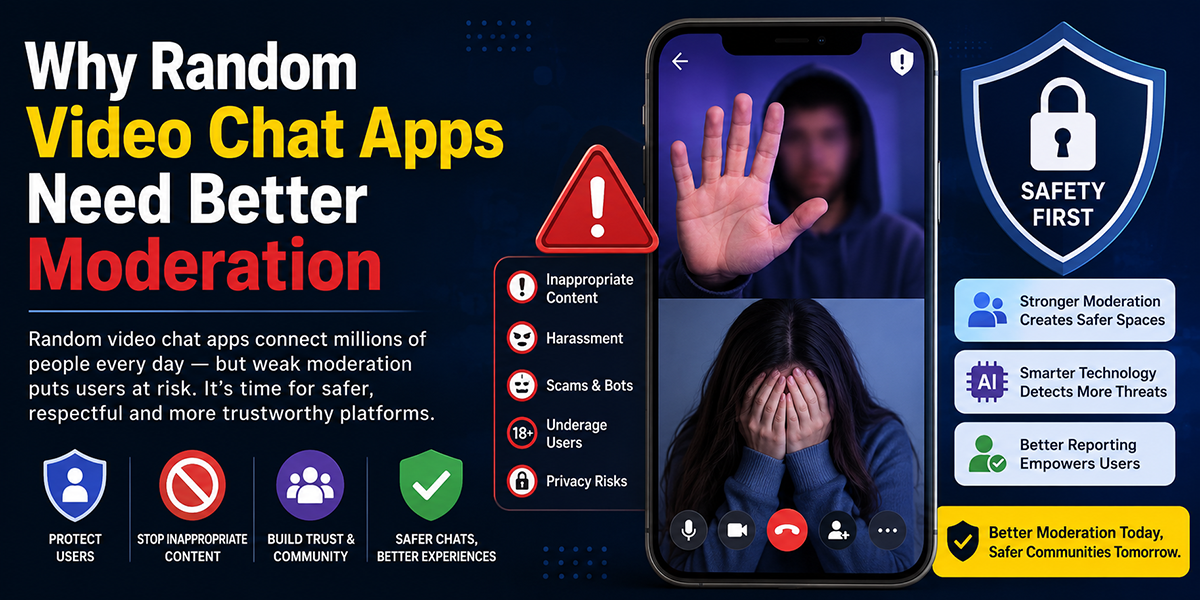
I tested the moderation path because Mico safe is one of the biggest user concerns. Blocking was straightforward. Reporting was available, though not especially confidence-inspiring in design or feedback. It exists, and that matters. But it didn’t feel as robust or transparent as the best moderation systems.
What I did not count heavily
I didn’t base this review on every side feature, gift mechanic, or social add-on because that would blur the real question: can you meet decent people without the app becoming a grind? For most users, that’s the metric that actually matters.
Is Mico Safe?
Safety on Mico is best described as adequate but not especially reassuring.
The app does provide baseline safety tools. You can block users, report problematic behavior, and avoid continuing conversations that feel wrong. That puts it above totally unstructured platforms. During testing, I also saw enough platform control to suggest Mico isn’t a complete free-for-all.
But if you’re asking is Mico safe in a stronger sense, meaning high trust, strong moderation visibility, and low exposure to suspicious behavior, the answer is more cautious.
What made me moderately cautious
- Some profiles felt inauthentic or engagement-driven
- The app’s monetization structure can blur social intent
- Reporting tools were present, but not particularly transparent
- Trust signals around profile authenticity felt limited
What made it usable
- Easy blocking and disengagement
- No immediate sign of total moderation collapse
- Enough normal users to avoid the app feeling purely predatory
The key safety issue isn’t just explicit abuse. It’s trust uncertainty. On a well-moderated app, you get stronger confidence that profiles are who they claim to be and that bad behavior is handled quickly. On Mico, that confidence level is moderate at best.
If you use the app, basic precautions matter:
- Don’t share private contact details too quickly
- Be skeptical of profiles that escalate oddly fast
- Avoid sending money or captivating with pressure tactics
- Use text first to test whether the person seems genuine
- Report and block aggressively when something feels off
So, Mico safe? Safe enough for cautious casual use by informed adults, yes. Safe enough to recommend blindly to everyone, no. You should treat it like a medium-trust social space, not a vetted community.
Free vs Paid Features
The Mico free vs paid question is one of the most important parts of this review because an app can be technically usable and still feel annoying if every meaningful interaction is gated.
The free version is real. You can sign up, browse, initiate some interactions, and get a feel for the app without paying right away. That’s the good news. Mico is not one of those apps where “free” is basically a decorative label.
The less good news is that the app clearly wants to push you toward spending. As you use it more, limitations and friction points become more noticeable. Premium-style benefits are positioned as convenience, better access, or enhanced visibility, and frequent users will definitely feel that pressure.
Is the free version usable?
Yes, but with caveats.
The free tier is enough to evaluate whether you like the user base and overall vibe. It is not the most comfortable way to use the app long term if you’re trying to maximize conversations.
Is premium worth it?
For most people, only maybe.
Premium makes the most sense if:
- You use Mico often, not just occasionally
- You already like the app’s user base
- You want smoother access rather than basic experimentation
Premium is not worth it if:
- You’re still unsure whether the users feel genuine
- You only want casual drop-in chats
- You’re comparing Mico against alternatives with better free experiences
My judgment in this Mico review 2026: start free, test aggressively, and only consider paying if you’ve already found a pattern of worthwhile interactions. Paying to “unlock the possibility” of a better experience is risky here. You want proof first.
Mico Pros and Cons
Here’s the cleanest summary of the app’s strengths and weaknesses.
Pros
- Fast to start using: signup and onboarding are simple.
- Good match momentum: it usually doesn’t feel empty.
- Decent video chat quality: calls are functional and mostly stable.
- Usable free version: you can test the app without paying immediately.
- Some genuine users: real conversations are possible.
Cons
- Inconsistent user quality: not every match feels trustworthy or worthwhile.
- Noticeable fake or low-confidence profiles: this is a legitimate concern.
- Moderation confidence is only average: safety tools exist, but they don’t stand out.
- Monetization pressure: the app nudges spending more than ideal.
- Busy interface: it can feel cluttered, especially at first.
Quick verdict on the tradeoff
Mico’s pros are practical. It works, it’s active, and it gives you enough access to understand what the app is about. Its cons are more structural. They affect trust, comfort, and long-term value.
That distinction matters. You can forgive a slightly messy interface. You can’t fully ignore uncertainty around who you’re talking to.
So the Mico pros and cons come down to this: if you’re patient, selective, and okay with filtering, Mico can be entertaining and occasionally rewarding. If you want a cleaner signal-to-noise ratio, Mico will probably frustrate you.
Mico vs Other Video Chat Apps
A good Mico review has to answer the comparison question, because very few people choose this app in a vacuum. They’re deciding between Mico and a small set of nearby alternatives.
The big difference is that Mico feels more socially layered than bare-bones random chat apps. That can be a plus if you want some profile context. But it can also create more room for noise, performative engagement, and monetized friction.
Here’s the short version before the head-to-heads:
| App | Best For | Main Weakness |
|---|---|---|
| Mico | Casual social discovery with profile-based interaction | Mixed authenticity and monetization pressure |
| Monkey | Fast, energetic social randomness | Can feel chaotic and youth-skewed |
| Chatous | Text-first topic-based chatting | Slower momentum, less video-first energy |
| OmeTV | Straightforward random video chat | Less depth and less profile context |
Mico’s position is basically this: more layered than OmeTV, more relationship-oriented than Monkey, and more video-social than Chatous. Whether that’s better depends on what kind of experience you actually want.
Mico vs Monkey
If you’re choosing between Mico vs Monkey, the decision mostly comes down to vibe and control.
Monkey tends to feel faster, louder, and more impulsive. It leans into quick social energy. Mico, by comparison, gives you more profile context and a slightly more structured discovery experience. That makes Mico feel less like a pure roulette wheel.
Where Mico wins:
- Better sense of profile-based browsing
- Slightly more room to evaluate users before captivating
- Less pure chaos in the overall flow
Where Monkey wins:
- Faster-feeling spontaneity
- More immediate social energy
- Often simpler to understand in the moment
The catch is that Monkey’s speed can also make it feel noisy and less grounded. Mico is better if you want at least some ability to screen users before diving in. But if your goal is pure instant entertainment, Monkey may feel more alive.
My take: choose Mico vs Monkey if you want a more layered social app and don’t mind filtering. Choose Monkey if you want high-speed randomness and can tolerate more unpredictability.
Mico vs Chatous
The Mico vs Chatous comparison is interesting because these apps solve slightly different problems.
Chatous traditionally appeals more to users who like text-first conversation and topic-based matching. It can feel calmer and less visually performative. Mico, on the other hand, is much more about social presence, profiles, and video-oriented interaction.
Where Mico wins:
- More immediate sense of activity
- Stronger video-chat orientation
- Better for users who want visual social discovery
Where Chatous wins:
- Often better for slower, conversation-led interactions
- Less pressure around appearance and instant chemistry
- Can feel less gamified
In plain terms, Mico is the better pick if you want to see people, browse profiles, and move quickly toward live interaction. Chatous is the better pick if you value conversation quality over visual momentum.
If your biggest concern is Mico fake profiles or shallow interaction, Chatous may feel more comfortable because text-first spaces sometimes reduce performative noise. But if you find text-only apps too slow, Mico will likely feel more captivating.
So in the Mico vs Chatous debate, Mico wins on excitement and speed, while Chatous often wins on conversational intention.
Mico vs OmeTV
The Mico vs OmeTV choice is probably the clearest of the three comparisons.
OmeTV is much more direct. You open it, connect, and move on quickly if the interaction isn’t working. That simplicity is both its greatest strength and its biggest limitation. It’s efficient, but thin.
Mico gives you more surrounding social structure, profiles, browsing, and more sense that you’re in a social network rather than a single-purpose random call tool.
Where Mico wins:
- More profile context before or around interactions
- Broader social discovery feel
- Better if you want repeated or layered engagement
Where OmeTV wins:
- Simpler interface and lower cognitive load
- Faster access to purely random video chat
- Cleaner experience if you hate feature clutter
The trust question is interesting here. OmeTV can feel raw, but because it’s simpler, you often know exactly what kind of interaction you’re getting. Mico adds more social depth, yet that same depth can make authenticity harder to judge.
My advice: pick Mico if you want more than pure randomness. Pick OmeTV if you want a stripped-down video chat experience and don’t care about extra social layers.
For many users, Mico vs OmeTV comes down to this: richer but messier, or simpler but more limited.
Who Should Use Mico?
Mico is not for everyone, and that’s probably the most useful thing I can tell you.
Mico is a decent fit for you if:
- You enjoy social discovery apps and don’t mind filtering through mixed-quality users
- You want a blend of profile browsing, text chat, and video chat
- You’re comfortable using safety tools and trusting your instincts
- You care more about activity and access than perfect curation
You should probably avoid Mico if:
- You want the highest confidence in profile authenticity
- You get frustrated quickly by fake-seeming or low-effort accounts
- You prefer clean, minimal interfaces
- You only want deep, thoughtful conversations
- You’re expecting a strongly moderated, low-risk environment
Can you genuinely make friends on Mico? Yes, I think it’s possible. But I wouldn’t describe it as effortless or especially likely on a casual first try. The app gives you opportunities, not guarantees.
That distinction matters. Mico is better as a discovery tool than as a trusted social space. If you treat it like a place to sample conversations carefully, you may get value from it. If you treat it like a reliable friendship app right out of the gate, you’ll probably be disappointed.
In other words: Mico works best for selective users with realistic expectations.
Final Verdict: Is Mico Worth It in 2026?
So, is Mico worth it in 2026?
My answer is: sometimes, for the right person.
This Mico review 2026 found that the app is legitimate enough to use, active enough to stay interesting, and functional enough to support real chats. Signup is easy, match speed is solid, and video quality is good enough for casual conversation. Those are real positives.
But the weaknesses are equally real. User quality is inconsistent, Mico fake profiles are a valid concern, moderation only inspires moderate confidence, and the paid value isn’t strong enough to recommend blindly. The free version is the smarter starting point, and for many people it will also be the smarter stopping point.
Summary of testing results
- Legit or scam? Legit, but uneven.
- Safe or risky? Moderately safe for cautious adults, not highly reassuring.
- Free version usable? Yes, though limited.
- Premium worth it? Only if you already know you like the app.
- Can you make friends? Possible, but not consistently easy.
My recommendation
Use Mico if you want casual social discovery, don’t mind sorting through mixed-quality profiles, and prefer a more layered experience than OmeTV. Skip it if you want stronger trust signals, better moderation confidence, or a cleaner free experience.
Overall rating: 6.5/10.
That’s not a disaster score. It’s a selective recommendation. Mico can be fun and occasionally worthwhile, but only if you go in with your eyes open.
Frequently Asked Questions about Mico App
What is Mico and what does it offer?
Mico is a social discovery and video chat app focused on meeting strangers through live rooms and one-on-one video chats, with features like profile browsing, text chat, and reporting tools for safety.
Is Mico safe to use and are there fake profiles on the app?
Mico provides basic safety tools like blocking and reporting and is moderately safe for cautious adults. However, some profiles may feel suspicious or low-effort, so users should filter carefully and avoid sharing private info too quickly.
How does the free version of Mico compare to the paid premium version?
The free version of Mico is usable for trying out the app and starting conversations but is limited and encourages upgrades. Premium may be worth it only for frequent users who have already found valuable interactions.
How quickly can users get matched on Mico and how is the video chat quality?
Mico generally offers fast match speed and decent video and audio quality on stable connections, making it functional for casual conversations though not premium-level.
How does Mico compare to similar apps like Monkey, Chatous, and OmeTV?
Mico offers more profile context and social layering than OmeTV, is less chaotic than Monkey, and focuses more on video than Chatous. The best choice depends on whether you prefer profile detail, conversation depth, or simplicity.
Who is the ideal user for Mico and who should avoid it?
Mico suits users who enjoy casual social discovery, are comfortable filtering mixed-quality profiles, and want a blend of video and text chat. It’s less ideal for those wanting highly curated, deeply moderated, or purely authentic conversations.

Tony is a website publisher and technology reviewer who specializes in video chat platforms, random chat apps, and online communication tools. He tests apps for usability, safety features, moderation quality, pricing, and overall user experience. His reviews are based on hands-on testing and independent research.